
 Việt Nam
 English
 한국


{Market News] Tightening supply, export coffee prices fluctuate
Closing the trading session on April 4, world coffee prices had mixed movements, with Arabica coffee rising to its highest level in 6 months. Robusta coffee prices were turned down due to profit-taking activities that appeared after the increased Robusta coffee inventories.
Specifically, on ICE Futures Europe, the price of coffee delivered in May 2024 decreased by 46 USD/ton, at 3,766 USD/ton; delivered in July 2024 decreased by 29 USD/ton, at 3,698 USD/ton.
Data shows that Robusta coffee inventory on ICE Futures Europe as of April 4 has recovered to its highest level in 2.5 months reaching 30,940 tons. Similarly, on ICE Futures US, the coffee futures price for delivery in May 2024 increased by 3.15 cents/lb, at 206.75 cents/lb, for delivery in July 2024 increased by 3 cents/lb, at 205 cents/lb. .8 cents/lb.
Arabica coffee prices are supported by concerns that recent heavy rains in Brazil's coffee-growing regions could damage coffee trees. Accordingly, weather forecasts show that the Minas Gerais region - accounting for about 30% of Brazil's Arabica coffee production - received 75.4 mm of rain last week, equivalent to 335% of the historical average.
European Coffee Federation, E.C.F. reported that port coffee inventories held in warehouses in Belgium, Germany, France, Italy, and Spain, fell 2.47% in February 2024 to a total of 6,696,450 bags at the end of the month. It is worth noting that the total Robusta inventory at the end of February, was 21.06% lower in the first two months of calendar year 2024 compared to the previous year and consumed in only one month, which is considered very low compared to demand. of roasters, through the above figure, shows us the general tightening situation common in the Robusta coffee market.
Commenting on the price increase of more than 330 USD/ton of Robusta coffee in the previous 2 sessions, experts said that concerns about excessive drought in Vietnam in recent times are pushing Robusta coffee prices further. increase.
On the two world coffee floors, there are only buyers but very few sellers. Many coffee-producing countries are absent from the floor and do not trade because their export volume is low. Indonesia's exports in the first 2 months of this year only reached nearly 6,500 tons, down 28% compared to the same period in 2023.
Noting the reality, the Central Highlands is in the peak period of the dry season in 2024. Prolonged intense hot weather causes water levels in rivers, streams, lakes, and dams to decrease rapidly. Some places have exhausted their water sources.
This year, due to the effects of climate change, the dry season comes earlier than usual and prolonged hot weather causes water levels at dams in some localities to drop rapidly.
Most recently, the escalation of tensions in the Red Sea has created unforeseen complications in shipping routes, driving the need for roasters to switch to storing coffee in the consumer country.
According to the European Coffee Federation, the European Union has the highest per capita coffee consumption in the world, although consumption levels in member markets vary. The size of the European Coffee market is expected to reach 47.88 billion USD in 2024 and is forecast to reach 58.14 billion USD in 2029, an average growth of 3.96% in the period 2024 - 2029.
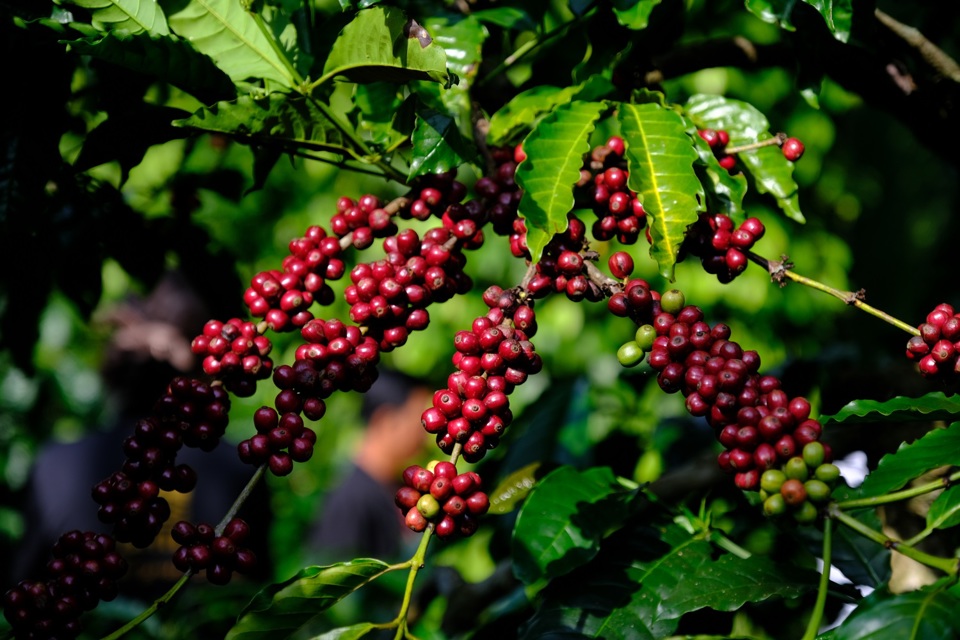
Coffee is one of the most popular drinks in Western Europe because it is deeply ingrained in culture and widely used in consumers' daily lives. In addition, demand for coffee is also increasing in the region due to the number of new coffee shops opening, the development of coffee shop chains, and the increasing number of people buying coffee machines.
Therefore, Europe is a large potential market that any coffee-producing country wants to exploit.
According to data from the European Statistics Agency (Eurostat), in 2023, the EU imports coffee to 4.05 million tons, worth 19.17 billion EUR, down 9% in volume and 10.2% in value. prices compared to 2022, due to economic recession and inflation remaining at a high level, causing people to tighten spending.
In 2023, the EU imports coffee from Vietnam to 652 thousand tons, worth 1.53 billion EUR, down 1.4% in volume and almost unchanged in value compared to 2022. Vietnam's coffee market share The EU's total imports from the world increase from 14.85% in 2022 to 16.08% in 2023.
Similarly, Vietnam's coffee market share in the EU's total imports from foreign markets increases from 21.69% in 2022 to 23.75% in 2023.
according to Ngoc Ngan-Congthuong.vn


